By: Firas Youseef. Palestinian doctor, originally from Gaza. Colombo-Palestine Community
October 21, 2025
My story begins with my grandfather, who was born in East Jerusalem and lived a childhood marked by family peace and love in a house built by my great-grandparents. But that peace was forcibly shattered. Armed soldiers arrived in his neighborhood and began threatening him. They killed his goats and committed atrocities in the area: they murdered his father and raped and killed his thirteen-year-old daughter.
Fearing for the rest of his family, my grandfather decided to flee with only the key to his house and the deeds signed during the Ottoman Empire. They arrived in Gaza, where relatives took him in, but warned him that he could not return without risking murder.
He was never able to return to his home, which today belongs to foreign settlers.
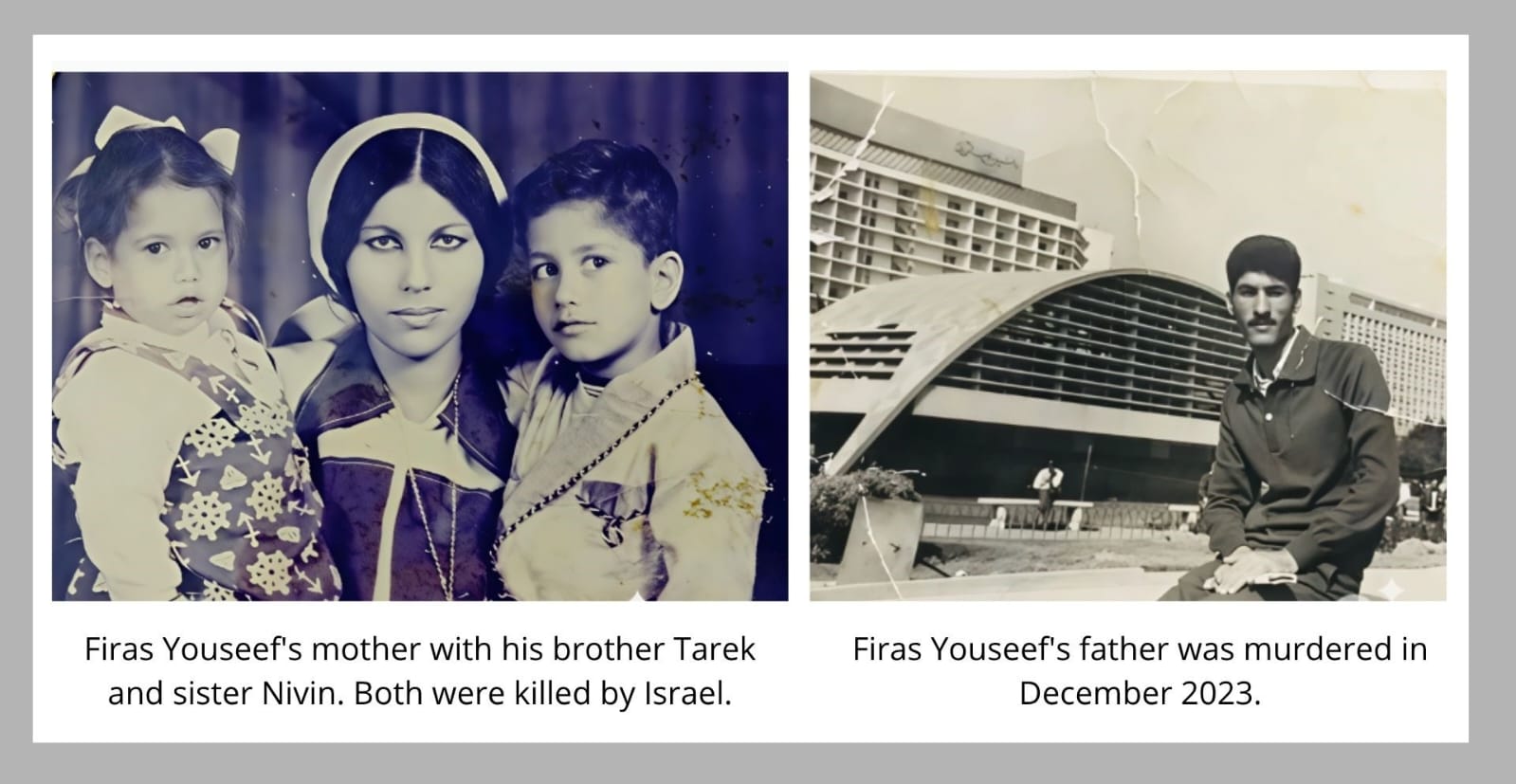
This ancestral wound is the root of my own story, marked by the death of my five-year-old brother, Tarek, in 1981. Tarek was my inseparable companion, and my mother asked me to watch over him on the way to school in Gaza, passing through three military checkpoints. But an Israeli soldier opened fire on him, believing the blue water pistol he was playing with to be a threat. Tarek died in my arms, and I was also wounded.
The pain of his loss stayed with me for years. In a confrontation years later, I confronted the soldier who killed my brother, and because of that action, I had to flee, leaving my homeland and my family behind.
While I was training as a doctor abroad, my family in Gaza suffered detention, torture, and the destruction of their home. But tragedy struck again in 2023, when a new genocide against Gaza began. My brother, his ten children, his wife, and his mother-in-law were killed.
My sister was wounded, and her husband and brothers-in-law were also killed. All of my family’s homes were destroyed. In total, I have lost more than fifty relatives in this offensive.
This story is not just personal. It is a reflection of the violence and dispossession that the Palestinian people have suffered for generations. We are a people who resist, who remember, who mourn their dead, and who cry out for justice.
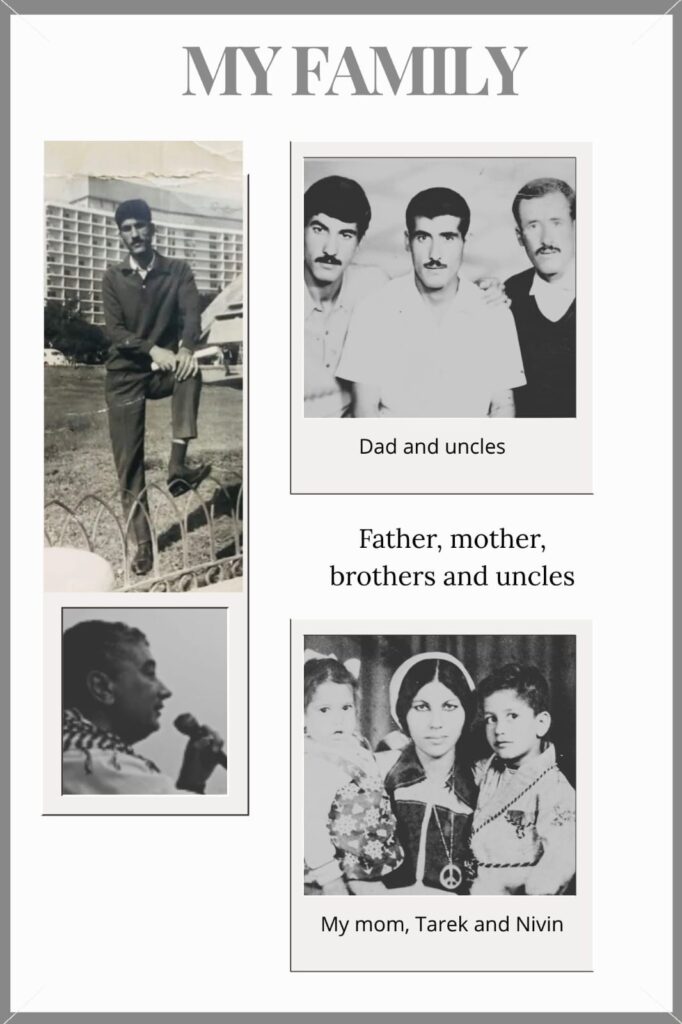
I share this testimony so that the humanity behind each statistic is not forgotten. My brother, my grandfather, and my fallen relatives remind us of the urgent need to listen, understand, and act.

PALESTINE: A Historic Land
Su historia se remonta a miles de años. Fue una de las primeras regiones habitadas del mundo
Its history dates back thousands of years. It was one of the first inhabited regions in the world. “At the end of the 19th century, Palestine was part of the Ottoman Sultanate and had a Jewish population of approximately 3-4%, a Christian population of 10-11%, and a Muslim population of 85-86%—mostly Sunni. All these communities spoke Arabic and had lived together for over a millennium in a Palestine characterized by diversity… In Palestine at the end of the 19th century, virtually all of its inhabitants were Arabs (according to the linguistic-cultural identity criterion) and had a heterogeneous religious affiliation» (The Conversartion)
Source: https://theconversation.com/como-era-palestina-antes-de-todo-258442- 2
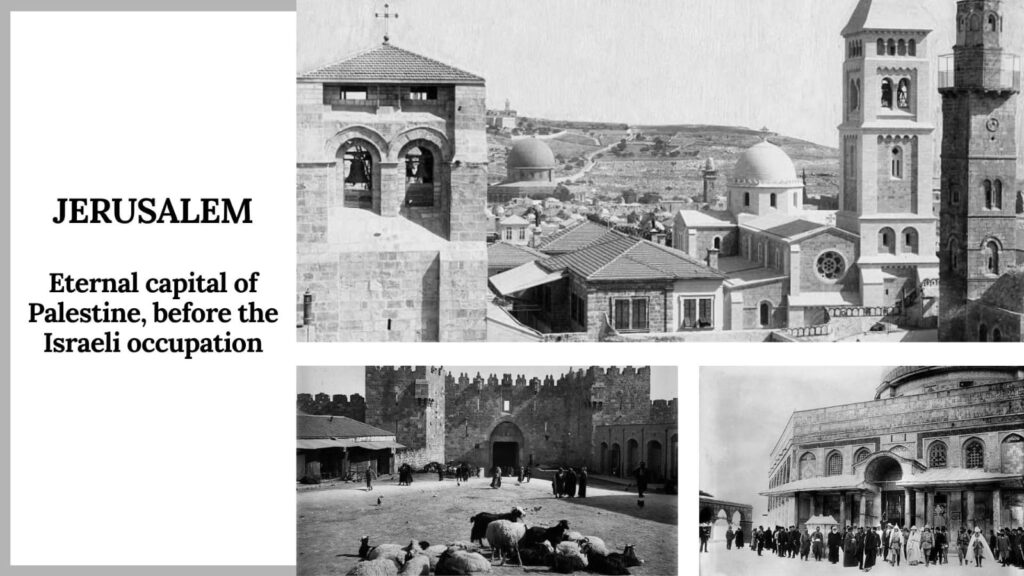
City of Jerusalem
The Al-Sharaf neighborhood in the Old City of Jerusalem: This is an old residential area that belonged to an Arab family called the Sharaf family. This neighborhood is adjacent to the al-Buraq Wall (known as the Western Wall) and is located in the southeast of the Old City of Jerusalem. The name comes from one of Jerusalem’s notables named Sharaf al-Din Musa, whose descendants were known as the Banu Sharaf. Formerly, their residential area was known as the Kurdish Quarter and later became known as the Knowledge Quarter. The Al-Sharaf neighborhood encompassed numerous alleys and neighborhoods… The old photo dates from 1925.
Gaza City 1930
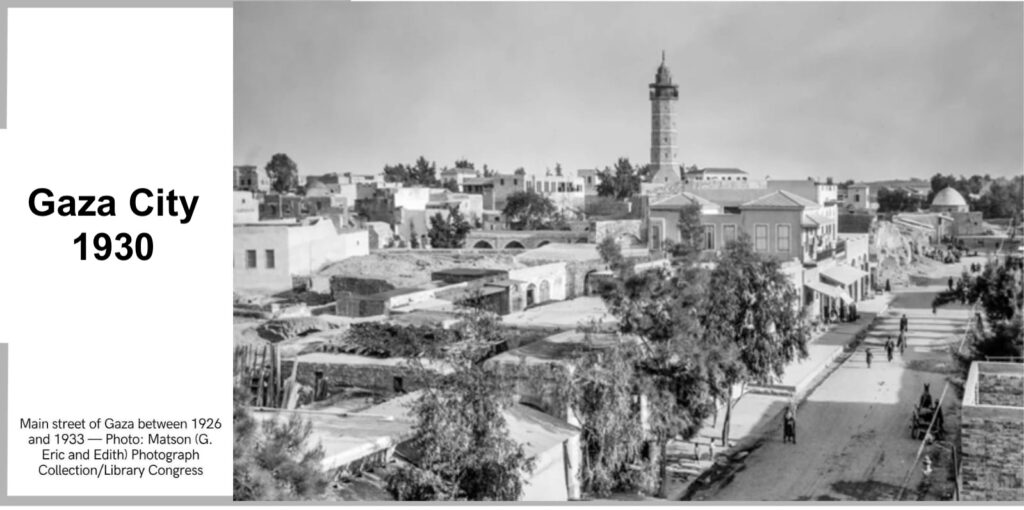
“In the largest oasis in the region, water wasn’t the only source of wealth. For thousands of years, Gaza has been a bridge between Asia and Africa, linking the Levant with Egypt and North Africa. This link was known as the Way of Horus in Pharaonic times and the Sultan’s Way in Ottoman times. With its port, it also served as a link to Europe for trade caravans from the Arabian Peninsula.
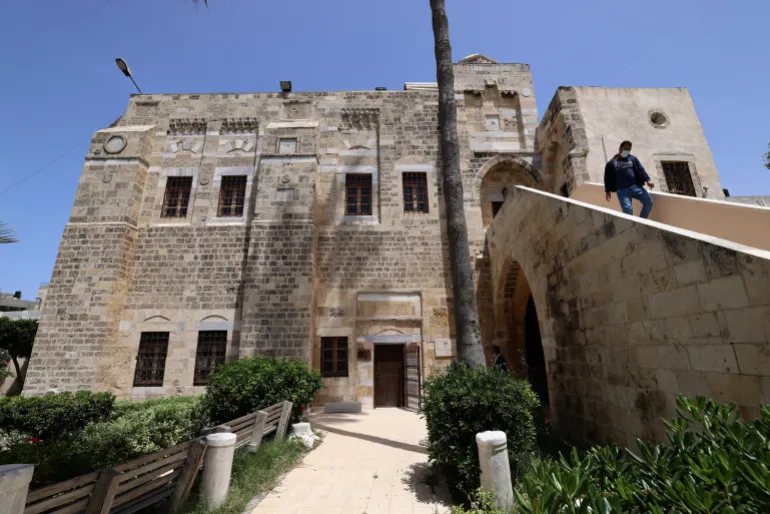
The 13th-century Qasr Al-Basha in Gaza City was hit by Israeli airstrikes last month [File: Emmanuel Donald/AFP]. Source: Aljazeera