
By: H. Klement – July 7, 2025
«Workers under attack», was the title on the United Steel Workers (USW) union’s page, which claims to be «the largest private union in North America,» when denouncing: «Trump and Musk’s onslaught aims to paralyze labor rights, security, and oversight» [1]
The war unleashed by the U.S. and Israel against Iran, as well as Trump’s attacks on democratic freedoms and his trade war against other powers or countries under U.S. domination, have garnered the attention of the major media outlets. Few, however, focus on the measures against immigrant workers and, more broadly, against the workforce in the country, as denounced by the USW union.
Therefore, this article will address the attack on employment, acquired rights, and, in particular, the fierce persecution of immigrant wage earners.
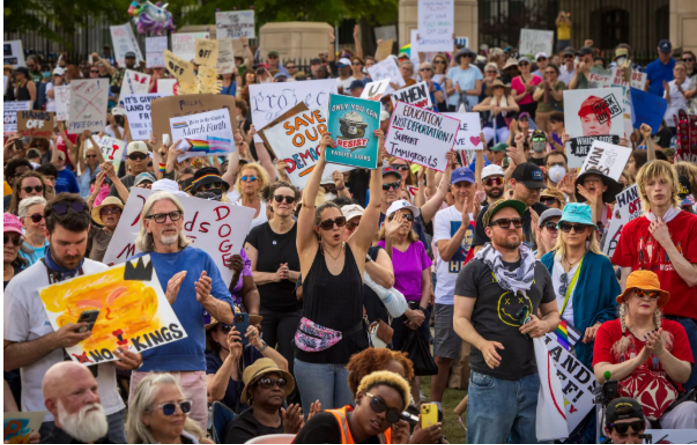
It is imperative to first focus on the new developments in the landscape. Trump’s offensive against the working class has found a resounding response in the form of mass mobilizations and direct actions, led by thousands of immigrant workers. This brave resistance to deportations, which began in Los Angeles, has spread to numerous cities across the United States, surprising many. The mobilizations have reached a scale that few could have anticipated.
One columnist highlighted that “on June 15, five million people protested in two thousand cities in opposition to the raids driven by Trump and his authoritarian blunders during No Kings Day” (Reflections on No Kings Day)【2】. This phenomenon demonstrates that millions of people are not willing to be treated as criminals nor to be trampled upon and treated as second-class humans.
It is crucial to note that this response is taking place in the most effective terrain: direct and massive confrontation with the government. Furthermore, these actions are unfolding in parallel with other protests against the war in Iran and the genocide in Gaza, demonstrating widespread rejection of the Trump administration’s aggressions on the international stage. (You may also be interested in: “Protestas contra Trump: un pulso importante para los oprimidos” y “La resistencia: la otra cara de la realidad internacional”).
A Fierce Anti-Labor Offensive
From his campaign for a second term, Trump focused not only on immigrants but also on state workers, claiming at various rallies that these employees were «destroying this country» and labeling them «corrupt,» «dishonest,» and «not working at all.» He launched an attack against «bureaucrats,» promising to investigate the need for their employment. After his victory in the 2024 presidential elections, he appointed billionaire businessman Elon Musk — his largest individual donor, now fallen from grace — to lead a new initiative called the Department of Government Efficiency (DOGE), tasked with implementing mass layoffs and other measures [3]
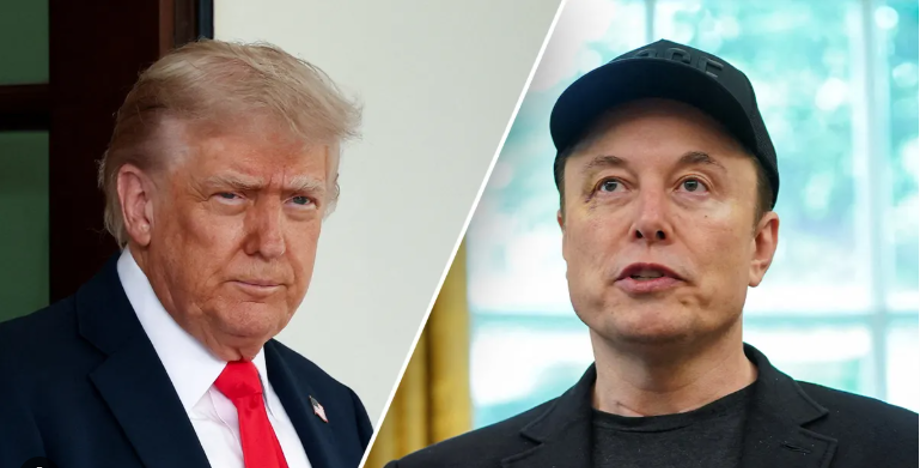
Under the leadership of DOGE, this retrograde magnate announced over 275,000 layoffs in the federal public administration of the United States. By May 12, 2025, The New York Times tracked more than 58,000 confirmed cuts, over 76,000 ‘buyouts’ of employees, and more than 149,000 additional planned reductions; these cuts total 12% of the 2.4 million federal workers. (See Annex).
These layoffs are distributed as follows: in the Federal Aviation Administration (400 employees), the Environmental Protection Agency (over 300 employees), the Department of Defense (the Pentagon will lay off up to 61,000 workers, starting with 5,400 next week), the Department of Agriculture (5,700 employees in early 2025), the Natural Resources Conservation Service (about 1,200 employees), the Forest Service (about 3,400 employees), the Department of the Interior (around 2,300 employees), the National Park Service (nearly 1,000 employees), the Department of Health and Human Services (approximately 3,200 employees), the Internal Revenue Service (IRS) fired between 6,000 and 7,000 employees on probation; between 1,200 and 2,000 employees of the Department of Energy; the Consumer Financial Protection Bureau (up to 1,750 employees); and the Treasury Department laid off about 7,600 people.
This wave of layoffs and privatizations, which has devastated the jobs of thousands of wage earners, has also swept away industrial security and increased risks at work. A true «labor massacre,» as it is said in Colombia.
The United Steel Workers union denounced:
In March, Trump signed an order aimed at stripping more than one million federal workers from collective bargaining rights in the State, Defense, Veterans Affairs, Energy, Health and Human Services, Treasury, Justice, Commerce, and Homeland Security departments.
In February, Trump took steps to privatize the U.S. Postal Service, which employs more than 500,000 unionized workers. And in March, he began dismantling the Department of Education. The National Education Association and the American Federation of Teachers (AFT) represent over 3.6 million workers. [4]
The union added: «Shortly after taking office in January, the Trump administration launched a campaign to paralyze workers’ rights, dismantle security agencies, and roll back years of progress for working families» [5]
In other words, the Trump government set out to ‘turn back the clock’ on the achievements and victories of the working class, in order to grab a larger share of national wealth, which has been generated by the efforts of workers, at the cost of further exploitation and plunging them into misery along with their families. This attack has the clear objective of further increasing profits for multinational corporations and banks, which his administration represents, as a spokesperson for the far-right sector of the financial oligarchy, dominant today in that capitalist empire.
Persecution of Immigrant Workers
The anti-immigrant rhetoric and policies that helped Trump’s electoral victory are tightly tied to his anti-worker offensive against all wage earners. He persecutes and expels from the country, as criminals, those who largely work, pay taxes, and keep key areas of the U.S. economy running. The goal of both the government and employers is to offload the weight of the crisis and economic difficulties onto workers, as well as the loss of ground to other powers like China or the European Union (EU).

Immigrants and the Economy
Nearly 30 million foreigners work in the U.S., representing 20% of the total workforce. These workers, both with and without permits, are fundamental to maintaining key sectors of the national economy. Most of the time, they earn wages below average and are victims of mistreatment and abuse, which employers, both large and small, take advantage of due to their immigrant status, especially if they are undocumented. Nevertheless, the hypothetical absence of these individuals, as Trump wishes, would have devastating consequences for the economy.
Some media outlets highlight the crucial role of these workers in the economy by raising questions such as: «Who picks the harvest? Who cares for your baby? The classrooms are empty; the manufacturing chain derails; the lights went out and no one can turn them back on; construction halts». [6]
In 2023, nearly 20% of the U.S. workforce was foreign-born, with 29.7 million immigrants out of 160.2 million workers, according to Census Bureau data. This number includes all workers born outside the country, including naturalized citizens, permanent residents, refugees, asylum seekers, and the undocumented.
Moreover, the Latino community’s economy in the United States reached a value of 3.2 trillion dollars, according to the 2023 official Latino Gross Domestic Product report by the Latino Donor Collaborative (LDC), a Washington D.C.-based non-partisan fiscal policy organization.
One non-partisan fiscal policy organization estimates that approximately 10.9 million lack legal documentation to work in the country. Furthermore, it is estimated that for every million immigrants in this situation, public services receive about $8.9 billion generated by their work, which is mainly concentrated in unstable economies and low-wage jobs like construction and agriculture [7]
It is estimated that about 13% of the 62 million Latinos in the U.S. are undocumented, according to the Department of Homeland Security, highlighting their significant economic impact. Currently, there are over 13 million undocumented workers in the country, many of whom have lived in the U.S. for decades.
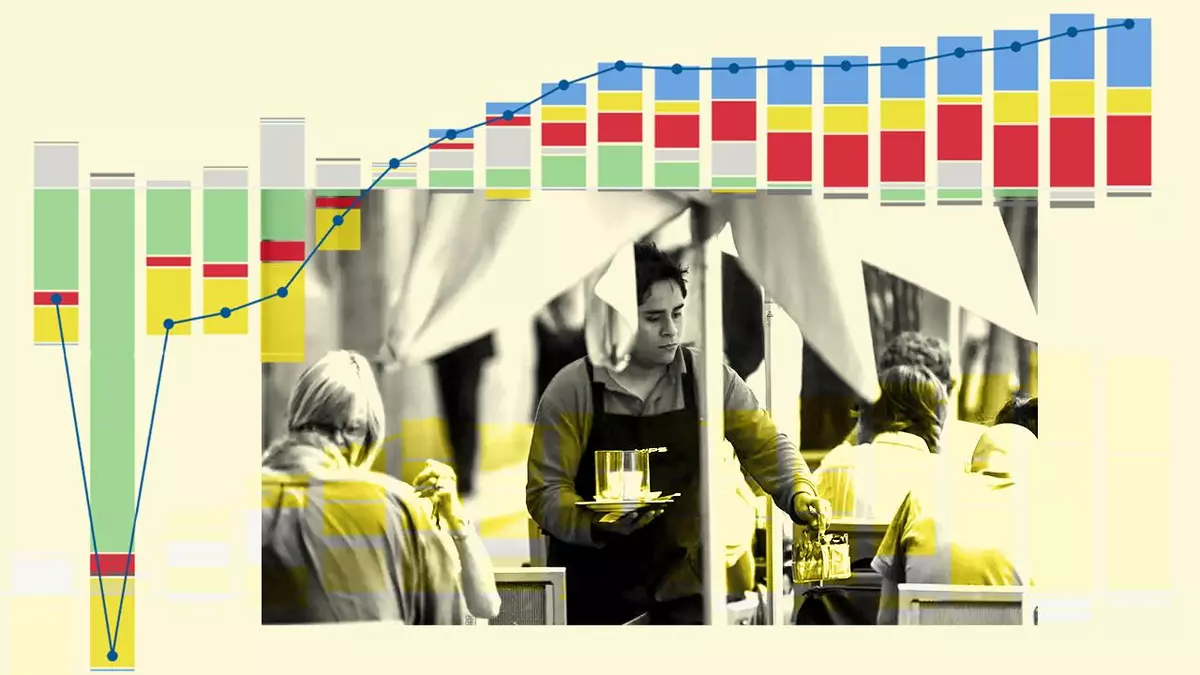
However, when major media outlets refer to ‘immigrants,’ they often focus on figures like Trump and other U.S. elite leaders, who come from immigrant families of European descent. Others only emphasize their relevance by performing jobs that natives or Anglo-Saxons are unwilling to take. However, most ignore or minimize the true contribution of those who have truly helped make ‘America great’ — the members of the working class, particularly immigrant wage earners.
The world’s economic powers, starting with the United States, owe much of their prosperity to immigrants who, whether by choice or necessity, have worked in various industries such as agriculture, manufacturing, mining, and domestic services. «Even now, these countries continue to rely on both low and highly skilled immigrant workers to drive economic dynamism and growth, by taking jobs that native workers do not want or cannot cover».[8] Moreover, far from harming the native workforce, migration tends to contribute to job creation among local workers.
But let’s let Avery Wear, labor activist and advocate for immigrant rights in the U.S., express it:
Our work — the productive population of our class — sustains all other people: we maintain the inactive ruling class of all ages, as well as children and the elderly of all social classes. And since undocumented workers come here looking for jobs, they make up an overwhelming portion of the working-age population.
By ignoring the fact that the majority of the undocumented population is of working age and belongs to the working class, the political class has deceived us into believing that immigrants can be harmful to our class.
The economies of the countries of origin are severely affected by the persecution and expulsion of workers, as this leads to a decrease in remittances. In Mexico, remittances exceeded $60 billion in 2023, nearly double the foreign direct investment. Similarly, in Central American and Caribbean nations such as El Salvador, Haiti, Honduras, Nicaragua, and Jamaica, remittances account for over 20% of national income. A similar negative effect would occur from the proposal to tax remittances sent from the U.S. to Colombia at 3.5%.
Therefore, it is essential to combat the xenophobia promoted by major media outlets and the establishment among the population:
But do immigrants really “take” jobs from other workers? Often, immigrants simply do the hardest jobs that no one else is willing to take. Moreover, there is nothing unusual about different sectors of our class facing each other materially in a system designed to create artificial scarcity, making us fight amongst ourselves to divide and conquer our class.
The Trump administration’s argument of attacking the immigrant community as criminals has gained traction and served to terrorize them, as most of the available information is biased. Immigrants are accused of being criminals, despite statistics showing that their crime rates are generally lower than those of native citizens. This approach is aimed at attacking the working class, benefiting employers, including those who are descendants of immigrants but belong to the same capitalist social class as Trump.
The Political Role of Immigrant Workers
Avery Wear clarifies:
“…we must explain what everyone overlooks in the national debate on immigration, but which is vital for our class: immigrant workers are, and always have been, leaders in our class struggle”.[9]
He points out that since its inception, the struggles that led to the conquest of the eight-hour workday and the origin of the May Day commemoration, as well as the process of unionization, have been marked by the prominent role of the immigrant working class, which has played a key role in these and other great conquests:
The first organized national strike, the movement for the eight-hour workday in 1886, was led by German immigrant workers. The first massive step toward unionizing industrial factories began in 1909, when 20,000 immigrant women went on strike in the textile industry, leading to the formation of the Amalgamated Clothing Workers’ Union. The historic 1912 strike by the Industrial Workers of the World (IWW) in Lawrence, Massachusetts, held daily meetings with translators in 25 different languages. The Great Steel Strike of 1919 was led by Polish workers. And the decisive struggles of the 1930s involved millions of immigrant workers and their children.
Recognizing immigrant workers as a leading sector in the class struggle opens the door to questioning the lies taken as truths in the Republican and Democratic discourse on immigration [10]
Therefore, it is necessary to pause and examine his reference to the organizational level of this sector of workers in the United States:
Foreign-born workers, including millions of undocumented people, have a unionization rate of 10%. This is the same as the overall unionization rate for all workers. However, immigrants represent only 10% of the public sector workforce, where the general unionization rate is high, at 32%. In comparison, 14% of all workers are in the public sector. This means that foreign-born people are overrepresented in private sector jobs, where the unionization rate is only around 6%. [11]
There are objective reasons for this, as the existing persecution and discrimination push them to organize:
Undocumented workers face more repression and have fewer legal rights than the rest of our class. But often, it is these conditions that push more people to fight.
This does not mean that undocumented workers are more inclined to organize per se. Rather, we must understand that our undocumented comrades face a very harsh reality, which generates a set of intense and unique organizational experiences. [12]
Trump’s Authoritarian Policies
Without a doubt, this intense attack on immigrants has generated numerous contradictions regarding the broad democratic freedoms enjoyed in the country, especially among the Anglo-Saxon population. [You may also be interested in: “Trump: A Direct Threat to Democratic Freedoms”]

But Trump’s authoritarian abuses also undermine the institutions of bourgeois (imperialist) democracy and the separation of powers, generating greater crisis and growing discontent, not only among the population but also among various sectors of the ruling class and the financial oligarchy. The recent release of Palestinian activist Mahmoud Khalil illustrates the contradictions and the growing crisis provoked by Trump’s authoritarian attacks, a contradictory phenomenon with ups and downs, which is still in its early stages.
The notable break between Musk and Trump, along with the constant confrontations between the government and various institutions, are a clear reflection of this situation. A clear example is the Supreme Court’s endorsement of Trump, contrasted with the judicial order that represented a significant setback for his administration:
Federal district judge James Bredar declared on March 13 that the mass layoffs of workers on probation that began last month violated the regulations governing federal employee layoffs and ordered their reinstatement pending new litigation [13].
However, the main contradiction has undoubtedly been the massive mobilization of large sectors of workers and the general population, as a genuine rejection of his authoritarian and anti-worker advance. And it seems that this is the one poised to develop in a promising way for the oppressed.
The ‘Project 2025’ Behind the Scenes
This offensive against workers is not something improvised, but has been carefully planned since Trump’s first term. Although the former president has tried to distance himself from the plan guiding his administration, known as ‘Project 2025,’ this document includes attacks directed at immigrants and workers, reflecting many of his aggressive international policies.
The plan was developed by the Heritage Foundation, an influential organization since its founding in 1973, which has gathered a prominent group of far-right experts in Washington tasked with designing strategies to ‘reorganize the U.S. government.’
These policies are deeply rooted in an extremely regressive project whose purpose is to favor the imperialist financial oligarchy that controls both the U.S. and the world, at the expense of the persecution of workers, increased unemployment, and misery for large sectors of the population.
The Project 2025 document outlines four main objectives: to restore the family as the central piece of American life; dismantle the administrative state; defend the nation’s sovereignty and borders; and guarantee the individual rights given by God to live freely.
In this context, Avery Wear’s words during a meeting in San Diego, in front of about 90 activists and co-sponsored by the SEIU Local 221 Labor History Group, are especially revealing:
Because it’s no secret that “Project 2025” outlines a range of devastating attacks on labor rights: from the recent cancellation of federal union workers’ collective bargaining rights through executive orders, to the weakening of the National Labor Relations Board, to the legalization of retaliation against those of us who organize, and much, much more. [14]
Wear points out that Trump is intensifying the already difficult situation facing workers, especially immigrants, as a result of the policies of all recent U.S. administrations:
It’s no secret: the life of the working class is becoming increasingly difficult. In 1979, unions still organized 25% of the workforce. Today, we’ve dropped to 10%. And yes, we are definitely experiencing a union resurgence. But the damage done in the last 50 years has been immense. The working class no longer expects to be able to acquire housing, or virtually anything. Inflation-adjusted wages peaked in 1973, and by 2024, they were still nearly 2.8% below that level.
Wear also notes that those who attribute the current anti-labor offensive solely to Trump’s ultra-reactionary character are mistaken or attempting to conceal the fact that this offensive has been developing over the years, covering both previous Democratic and Republican administrations:
The Republicans absurdly accuse the Democrats of supporting open borders, despite the Operation Gatekeeper led by Bill Clinton and the thousands of migrant deaths it caused. Despite the record deportations under Barack Obama and Joe Biden. Despite Biden building more miles of the border wall than he claimed to reject. Despite the endless bipartisan increases in spending to reinforce the border. [15]
Likewise, Avery Wear warned that what we are seeing is a process that will continue, though more aggressively, with more attacks directed at workers and key sectors of the population. In this context, he indicated that «Trump is first going after immigrants, trans people, and state workers. Other attacks will follow». [16]
The Response: Large Protests and Mobilizations
As mentioned at the beginning, immigrant workers and others who have been subject to labor persecution and xenophobic attacks by Trump are responding decisively.
The “Hands Off” mobilizations have been joined by “millions of people protesting in two thousand cities” across the country, showing massive rejection of ICE raids. Furthermore, this movement seems to be transcending borders, as seen in Puerto Rico.
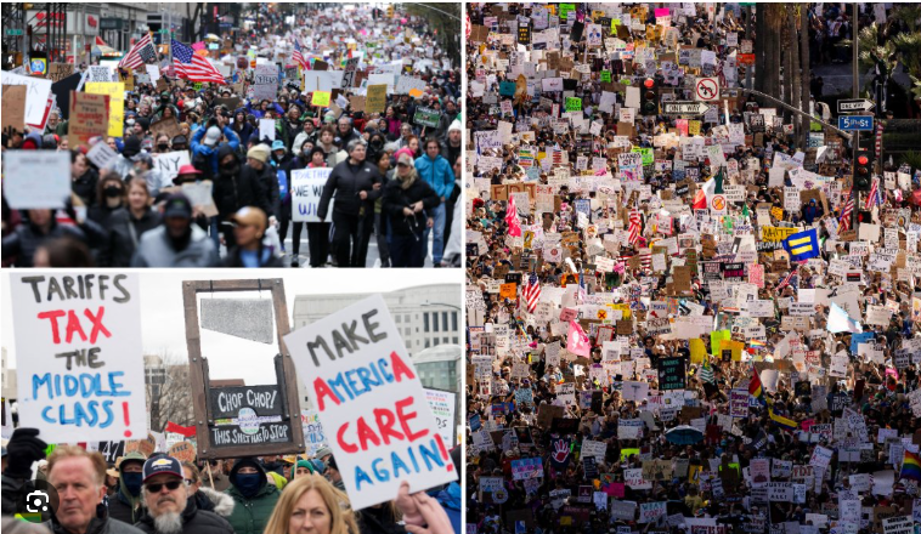
This resistance response in the U.S. intertwines with massive protests and mobilizations occurring in various cities across Europe and the Arab world, in rejection of the war against Iran, as well as in solidarity with the Palestinian cause and firm repudiation of the Zionist genocide in Gaza. [You may also be interested in: “Amid Chants of “Hands Off!” and “No Kings!”, Masses Rise Against Trump’s Policies”]
The National Strike in Panama, along with other actions, sets the path that should be followed by workers’ organizations in Mexico, Central, and South America. This effort is crucial for advancing a continental struggle against the persecution and expulsion of immigrants, as well as confronting the colonial offensive pushed by Trump. [You may see: “Donald Trump’s Colonial Offensive”]
Obviously, no right-wing government in Latin America will dare to organize something like this. Meanwhile, those claiming to be ‘left-wing’ in countries such as Mexico, Brazil, Colombia, Chile, and Venezuela, all with empty rhetoric about ‘dignity’ and ‘sovereignty,’ hide their refusal to take concrete actions. Their lack of initiative to confront Trump, defend the sovereignty of the nations under attack, and protect their citizens is total. None, so far, have dared to call for any anti-imperialist resistance action in the region, much less fight for the Second Independence of our continent.
It is then up to workers’ organizations, popular organizations, and those claiming to be socialist leftists to prioritize in their agendas organizing actions of solidarity and support for this fight being waged by our worker brothers and sisters inside the power that dominates and oppresses our nations, and to seek to unite them with the global protests sparked by the Zionist and imperialist aggression against Iran, which reinforces its genocidal alliance against the Palestinians. The reality of millions in determined struggle that we see today in the U.S. and other countries against the aggression of Trump and his allies is a clear path that is overdue to be walked. For immigrant workers and, in general, in the U.S., it is crucial to connect these actions with the global protests that, with ups and downs, are making their way through the world. [You may also see: “Taking the Streets for Gaza and Iran!”]
***
Annex:
Figures of layoffs in various U.S. government agencies
Layoffs by Agency
| Agency / Department | Employees Affected | Additional Details |
|---|---|---|
| NASA | ~3,870 | Approximately 20% of its staff, including scientists and engineers, due to budget cuts and deferred buyout programs. (timesofindia.indiatimes.com) |
| Department of Health and Human Services (HHS) | ~10,000 | Cuts to key agencies such as the CDC (~2,400 employees), NIH (~1,200 employees), and CMS (~300 employees). (en.wikipedia.org) |
| Department of Education | ~1,300 | Significant cuts to the Federal Student Aid Office and the Office for Civil Rights, reducing approximately half of their staff. (en.wikipedia.org) |
| National Oceanic and Atmospheric Administration (NOAA) | ~880 | Cuts affecting the National Hurricane Center and the Storm Prediction Center, representing about 7.3% of the total staff. (en.wikipedia.org) |
| Environmental Protection Agency (EPA) | Unspecified | Cuts to staff and proposals to repeal key climate change regulations. (apnews.com) |
| Department of Commerce | ~10,000 | 20% reduction in workforce, with approximately 10,000 workers laid off or scheduled for layoffs. (govexec.com) |
| Consumer Financial Protection Bureau (CFPB) | ~1,500 | Cuts affecting 88% of its staff, with a partial shutdown of its inspection operations. (govexec.com) |
| General Services Administration (GSA) | ~100 | Cuts to staff, with more than 100 employees laid off. (abcnews.go.com) |
| Small Business Administration (SBA) | ~720 | 20% reduction of its staff, with approximately 720 employees laid off. (abcnews.go.com) |
Additional Information
- Total Federal Layoffs:
- Over 275,000 federal employees have been laid off or are scheduled for layoffs, representing approximately 12% of the 2.4 million federal workers. (en.wikipedia.org)
- Layoff Process:
- The administration implemented a «deferred resignation» program, offering federal employees eight months of full pay and benefits to voluntarily accept their resignation.
- Massive layoffs have occurred in key agencies, including the Department of State, Education, and HHS, following Supreme Court approval. (govexec.com)
- Impact on Employee Morale and Mental Health:
- Federal employees have reported high levels of anxiety, stress, insomnia, and depression due to job uncertainty and mass layoffs. (federalnewsnetwork.com)
[1] Web Page United Nations.
[2] https://www.eltiempo.com/opinion/columnistas/reflexiones-sobre-el-no-kings-day-3463898
[4] Ídem.
[5] https://usw.org/es/news/trabajadores-bajo-ataque/
[6] https://elpais.com/autor/paola-angeli-semidey-nagovitch/#?rel=author_top
[7] https://itep.org/undocumented-immigrants-taxes-2024/
[8] https://www.eltiempo.com/buscar/?query=proyect-syndicate
[9] Ibídem.
[10] Ibídem.
[11] Ibídem.
[12] Ibídem.
[13] https://www.france24.com/es/ee-uu-y-canad%C3%A1/20250318-administraci%C3%B3n-trump-anuncia-la-reincorporaci%C3%B3n-de-casi-25-000-trabajadores-tras-una-orden-judicial
[14] Avery Wear «Por qué los trabajadores deben oponerse a las deportaciones» https://tempestmag.org/2025/02/immigrants-are-leaders-in-our-class-struggle/
[15] Ibídem. https://tempestmag.org/2025/02/immigrants-are-leaders-in-our-class-struggle/
[16] Ibídem.